Every project plan is a description of success. The milestones climb, the risks section is three bullet points written last, and the document ends with the thing shipped. Which means the most useful information about the project — the specific ways it is likely to die — appears nowhere in it.
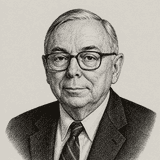
Charlie Munger, Warren Buffett's partner at Berkshire Hathaway for over four decades, made a career-long habit of working problems backwards. He credited the instinct to the mathematician Carl Jacobi, whose advice was to invert hard problems rather than attack them head-on. Applied to decisions, the move is this: instead of asking how to make the project succeed, ask in concrete detail what would guarantee its failure — then examine how many of those guarantees the current plan quietly contains.
The power of the question is that failure is more knowable than success. Success depends on things going right together, in combinations nobody can fully predict. Failure is a much shorter, much better-documented list. Projects of your project's kind die in characteristic ways: the sponsor changes, the scope grows past the team, the integration everyone deferred turns out to be the project, the customer the plan imagined does not exist, the key person leaves in month four. None of this is exotic. All of it is absent from most plans.
Write the failure memo
The exercise takes an hour and produces the most honest document the project will ever have. Write the memo from two years in the future explaining why the effort failed. Be specific and unkind: name the dependency, the meeting where scope doubled, the assumption about demand that no one tested. If the team writes it together, better — people will put into a hypothetical postmortem what they will not raise in a planning review, because describing a fictional death is safe in a way that doubting a live plan is not.
Then treat the memo as a checklist. For each cause of death: is it present in the current plan? Is anyone watching for it? What would its earliest visible symptom be? Some causes you eliminate outright. Some you cannot eliminate, and the honest response is a tripwire — a named early signal and an agreed response — rather than hope. The plan that emerges is usually smaller, slower and considerably more likely to survive.
Avoiding stupidity, in his telling, is not a lesser ambition than achieving brilliance. It is the reliable route to the same place, because most competitions are lost rather than won, and simply not dying of the usual causes puts you ahead of most of the field.
Watch out for
Inversion can curdle into a culture. A team that only ever rehearses failure stops proposing anything bold enough to fail, and a leader can wield the failure memo as a respectable way to kill whatever they already disliked. The method is a filter for plans, not a substitute for having them — Munger's own portfolio concentration shows he used it to act with conviction, not to avoid acting.
His record also shows the method's blind side: it protects against known killers, not unprecedented ones. Berkshire largely sat out technology it could not evaluate, which avoided ruin and also missed some of the era's largest gains — a trade he defended, but a trade. Inverting tells you what has killed projects like yours before. It is silent about the failure mode that has not happened yet.
Answer this next
If your current project fails, what will the honest postmortem say was the cause — and is that cause in the risk section today, or only in everyone's private expectations?