One lens, one question, at a time.
Documented decisions and live questions, read through one thinking lens at a time — what the method sees, and where it has failed.

Bans are now in force across most of the country and a study reports no effect on scores or attendance. An eleventh-century experimenter would ask what the apparatus was built to settle.
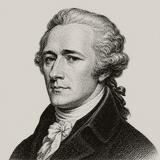
Transit agencies are cutting service as one-time relief runs out. A treasury secretary who made a bankrupt country creditworthy would say the problem was never the shortfall.
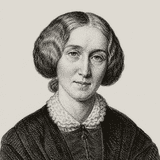
Families are hitting the same wall: there is no one to hire. A novelist who measured worth by diffusive effect rather than by fame would ask what the shortage figure leaves out.

The same driver is an employee under one test and a contractor under another, and the rules keep changing. A teacher asked what he would do first said he would correct the names.
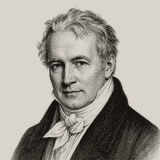
Records fell this summer on two continents, and some of what was lost cannot come back with the rain. A naturalist who measured a shrinking lake in 1800 would separate three quantities that get reported as one.

Reactors are being restarted, designs certified and partnerships signed, and long-held positions are being reversed. A politician who dropped doctrines when the numbers said so had one question he asked first.
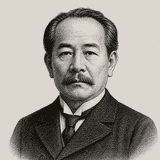
Only about a third of employers fund the new weight treatments, and some have stopped. The arithmetic is not mean-spirited, and a Meiji financier would say the frame it is calculated inside decides the answer.
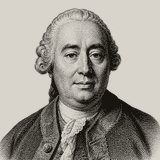
Retractions keep climbing and fabricated papers now arrive in batches. A philosopher who took apart what we mean by evidence would locate the failure somewhere other than peer review.
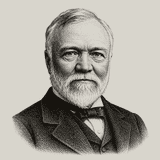
Two widely deployed projects froze this year for want of anyone to run them. A steel man who gave away most of his fortune attached a condition to every gift, and the condition is the transferable part.
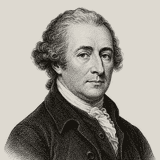
The same law is in force in one state and blocked in another, and the public argument is conducted almost entirely in abstractions. A politician who distrusted abstractions had a test for that.

Two housing numbers point in opposite directions this year. An astronomer who spent six years on a discrepancy of eight arcminutes would say the gap between them is the finding.

Campaigns this year have reached dozens of large organisations at once by attacking one platform they all ran. An old text on assessment would ask which half of your ledger is actually missing.
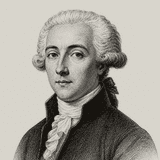
Companies relocating production report transition costs far larger than they planned for. A chemist who settled arguments with a balance would say the comparison was never like for like.
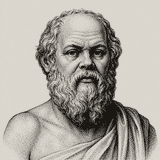
Detection tools are being switched off and oral assessment is returning. A man who wrote nothing and examined everyone would say the change is not about catching anyone.
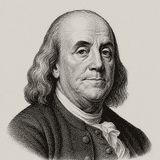
Carriers are withdrawing from entire states and non-renewing policies that were routine a decade ago. A printer who organised a fire company before he organised an insurer asked a different question first.
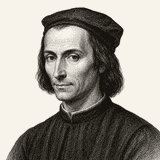
Large employers have started assessing how staff use the new tools as part of the performance review. A Florentine secretary who insisted on reasoning from behaviour rather than intention would predict the result quite precisely.
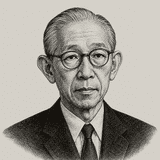
Employers in several countries are cutting junior roles or rewriting them to require judgement. A manufacturer who built a training school before the products justified it would ask what the firm produces besides output.
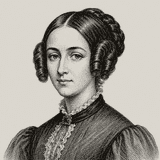
Most pilots impress a room and never reach production. The mathematician who wrote the first real account of a general computing machine began by drawing its boundaries, and for a reason worth borrowing.

A campus is announced, a transmission line is planned, and a bill arrives that nobody can explain. A biologist who took on the spraying programmes left a precise question about who decided.
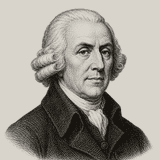
Four days in the office, decided centrally, communicated cleanly. A moral philosopher's objection to grand schemes was never that they are wrong, but that everyone inside them keeps moving.
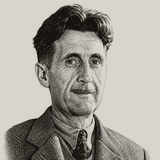
Cuts announced as automation are increasingly announced as reorganisation instead. A reporter who studied how sentences hide things left a ninety-second test for what the noun is protecting.
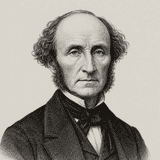
A Victorian philosopher held that an unchallenged belief decays into a slogan even when it is true. The test he proposed: state the opposing case so well its holders would sign it.

A fourteenth-century historian asked why conquering groups decay within a few generations. His answer — cohesion is the real asset, and comfort corrodes it — reads like a founding-team postmortem.

A naval programmer spent the 1950s arguing that machines should do the clerical layer of thinking work — and that deciding what belongs in that layer is the professional's real skill.
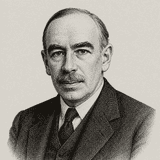
An economist's most portable idea: what is prudent for one actor can be destructive when everyone does it at once, because one party's spending is another's income. Organisations run on this error.
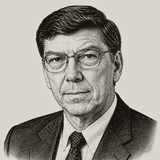
A strategy professor asked what customers actually hire a product to accomplish. Pointed at your own calendar and tool stack, the question becomes a firing squad.
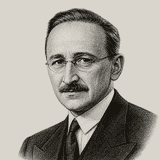
The people who know why the process fails are rarely the people who redesign it. A 1945 essay explains why that knowledge cannot simply be collected — and what to do instead.
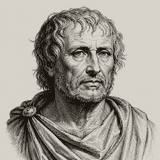
A Roman senator observed that people who would never hand over money hand over their time to anyone who asks. The audit he proposed is two thousand years old and still embarrassing.
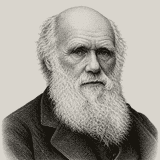
A naturalist noticed that convenient evidence stays remembered while inconvenient evidence quietly leaves. His fix was a rule about notebooks, and it is the cheapest honesty practice a team can adopt.
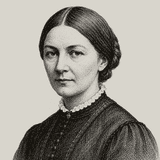
One vivid anecdote moves a meeting; it rarely moves an institution. A Victorian nurse-statistician showed what does: the count, against the right baseline, drawn so the argument makes itself.
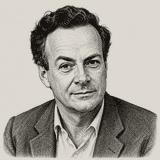
A physicist's standard for honest work: list the ways your conclusion could be wrong, and say them before anyone asks. Most product evidence is assembled to the opposite standard.
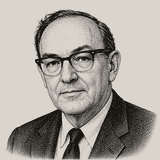
Information used to be the scarce thing at work; now the scarce thing is what information consumes. A 1971 observation turns every dashboard into a purchase order.
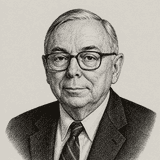
An investor's favourite method for hard problems: describe in detail how this project would die, then check how much of that description is already in the plan.
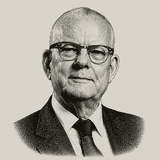
React to every weekly movement and you become the biggest source of noise in your own system. A statistician's demonstration shows why the well-meant correction makes the swings worse.
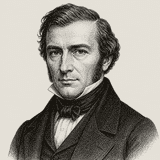
Every full calendar is evidence of work done. An 1850 pamphlet argues the real accounting is what those same hours would otherwise have built — the quarter that never appears in any review.
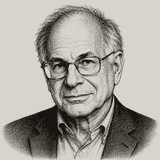
Every plan is persuasive from the inside. A psychologist's one reliable fix is to start from how projects like yours actually went, and only then argue about the differences.
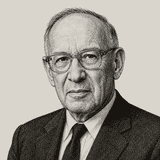
A strategy can execute beautifully for years after its reasons have expired. A management writer's last great essay is a method for catching the expiry early.
Every announcement comes with a number of jobs attached. A French pamphleteer built a whole method out of asking where the money would otherwise have gone.
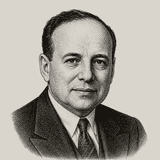
Nothing about the thing changed. A man who lost everything in 1929 and spent forty years working out why built his whole method around that sentence.
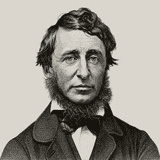
A different exchange rate for the same purchase. It was worked out in a borrowed cabin in 1845, and the man who worked it out kept a ledger with holes in it.
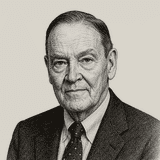
You know your rent, your energy bill and roughly what you spend on food. Almost nobody knows the one percentage that quietly compounds against them for forty years.
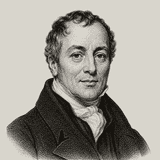
The person who decides what you pay is not the person you pay it to. A stockbroker who retired at forty-two worked out why, and the answer is about the worst place still worth living in.
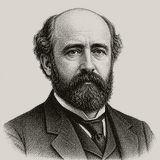
You earn more than you did three years ago and you are not better off. A nineteenth-century printer built an entire economics around noticing exactly that.

The question Andy Grove used to get there takes ten seconds to ask. Most companies cannot answer it honestly. Nine years later the same instinct cost him around $475 million.
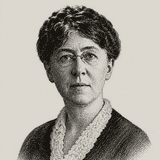
Both sides have named a demand. Neither has named what they want. A method built in Boston's settlement houses starts there — and the place it breaks is worth knowing before you use it.

Your team can suddenly produce ten times as much. A production engineer's account of waste puts that first on the list of things to be suspicious of.
How Field Notes are made
Each note is prepared by LikeGenius Editorial, drafted with AI assistance against one lens’s verified source library. Verbatim quotations appear only when checked against a public source, with the citation attached — the build refuses a note whose quotations are undeclared — everything else is our synthesis, and each note states where the documented record stops. Publication and revision dates are authored facts, not build stamps.