Listen to how your organisation's strategy gets defended in review. The case for it is fluent — everyone has heard it, everyone can perform it. Then someone asks what the argument against is, and the fluency stops. What comes back is a caricature: the competitors are behind, the sceptics do not get it, the alternative was considered and found wanting by people who cannot now reconstruct why.
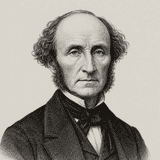
John Stuart Mill spent a famous chapter of On Liberty, published in 1859, on exactly this decay. His argument is usually remembered as a defence of open debate, but its sharpest edge points at the holders of true beliefs: a position that stops being challenged, he argued, rots from the inside even if it is correct. Its holders stop knowing why it is true. The reasons fade, the conclusion hardens into a slogan, and what remains is what he called a dead dogma — recited, believed, and useless for navigation, because nobody can tell which parts still bear weight. Worse, he insisted that hearing the opposition summarised by your own side does not help. You have not met an argument until you have heard it from someone who believes it, in its most persuasive form, pressed to its strongest.
That standard converts directly into a test for any organisational conviction: can anyone in the room state the case against the strategy so well that a genuine opponent — the competitor betting the other way, the board member who voted no, the customer who churned — would accept it as their own? If not, the strategy is not known. It is remembered.
Build the case, then schedule the collision
The practice Mill implies has two disciplines, and both are cheap compared with what they prevent.
First, the adversary's case gets written — a page, authored by someone assigned to believe it for a week, arguing the strongest version of the bet you did not make. Not a risks list; risks are the home team's furniture. A rival argument, with its own logic and its own evidence, of the kind an intelligent outsider actually holds. The test of the draft is that reading it should be uncomfortable, and the fastest check is to show it to a real sceptic and ask what is missing.
Second, the collision gets a calendar slot. Mill's deeper point is that this cannot be a one-time exercise, because beliefs re-harden — last year's live argument is this year's slogan. The strategy review that matters is the one where the standing conviction has to win again, against the best available opposition, in front of the people empowered to change course. If the conviction wins, you have recovered something valuable: everyone present now knows why, which is different from knowing that. And if it loses, it needed to lose, and the cheap place to lose is the room.
What this displaces is the ritual most reviews perform instead — a survey of reasons to continue, presented by the people who chose the direction, to an audience with no brief for the other side. Mill's chapter is, among other things, an explanation of why that ritual feels rigorous and teaches nothing.
Watch out for
The exercise can be theatre. An adversary's case written timidly, or assigned to the most junior person in the room, produces the caricature with better formatting — and the conviction emerges harder than before, having beaten a straw opponent in public. The assignment has to go to someone with the standing and the appetite to win, and the review has to carry the live possibility of changing the plan, or everyone learns the debate is decoration.
There is also a stopping problem Mill underweights: an organisation is not a seminar, and some seasons demand executing a decided thing rather than re-litigating it. The discipline is a scheduled instrument, not a standing licence to reopen everything whenever fluency falters. Choose the convictions large enough to deserve it, and defend the calendar in between.
Answer this next
For your team's biggest standing bet: who could write the page against it well enough that a real opponent would sign it — and when is that page next due to be heard?