For most of a decade two problems have been discussed in separate rooms. Cities do not have enough housing, particularly near the centre. And cities have too much office space, particularly older stock in locations that no longer command a rent.
The conversion numbers now running well above last year are what it looks like when someone finally puts the two in the same sentence.
Inventory what you have already given up on
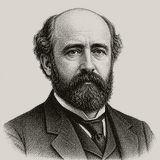
Chung Ju-yung built Hyundai out of construction and shipbuilding in a country with almost none of the inputs either normally requires, and one of his recurring moves is worth separating from the mythology that has grown around him.
When a scarce input blocked a job, his instinct was not to go and buy it. It was to inventory what the group already held — including things it had written off, mothballed or classified as something else entirely — and then to ask whether the problem could be restated so that one of those assets became the answer.
The phrase carrying the weight is including what it has written off. A written-down asset is invisible in precisely the way that matters. Nobody is looking at it, nobody is responsible for finding a use for it, and its book value announces that the question has been settled. An empty tower carried at a fraction of its construction cost is exactly that kind of object, and it sat in that condition for years while the housing conversation proceeded as though the only route to new homes ran through land acquisition and entitlement.
Restated, the housing problem stops being about finding sites. It becomes: which of the structures already standing in the places people want to live can hold dwellings?
Physics or filing
The reason this is a discipline rather than a slogan is the second half of his model, which is the part that keeps it honest: separate the constraints that are physics from the constraints that are habits of classification.
On a conversion the physics is real and it disqualifies a great deal of stock. A deep floor plate leaves interior space no window can reach. Plumbing on an office floor is concentrated in a core rather than distributed to where kitchens and bathrooms need to be. Floor-to-floor heights, structural grids, façades that do not open — none of these yield to determination, and the buildings that convert well are mostly the older, narrower ones designed before air conditioning made depth possible.
The classification constraints are a different category and they are the ones that moved. Zoning that permits offices and forbids dwellings on the same floor. Building code provisions written for one use and applied to another. A tax treatment that made holding an empty building cheaper than repurposing it.
The useful exercise for anyone stuck with an asset is exactly that two-column list. Put every blocking constraint in one column or the other, honestly. If the binding one is physics, stop; the restatement will not save you. If it is classification, you are looking at something that can be changed, and knowing which you face is most of the decision.
Watch out for
This is a conglomerate's move and almost nobody else's. It worked for him because one group happened to own a shipyard, a construction arm and a fleet simultaneously, so an asset idle in one part could be redefined by another. A single owner of a single tower cannot restate their way out of anything; for them the reclassification has to be done by a city, which is a slower and more political process than the model suggests.
It also teaches a manager to trust improvisation over analysis at exactly the scale where being wrong is fatal, and his record shows the bill. Compressing a schedule moves risk off the balance sheet and onto the site: seventy-seven workers died on the Gyeongbu Expressway between February 1968 and July 1970. A conversion is a construction project on an occupied street, and the same physics applies to the people doing it.
The wider method is not transferable either. It presumed a state allocating credit, foreign exchange and the largest contracts, and labour that was cheap and legally suppressed. His own firm carried billions in debt by 2000 and passed to its creditors the year he died.
Answer this next
Name something your organisation has written down or mothballed, and the problem it might be the answer to.
Then put the blocking constraints in two columns. Only one of those columns is worth arguing with.