There is a class of product with an unusual property: the better it is, the less of it should be sold.
A genuinely new antibacterial, effective against organisms that resist everything else, should be held in reserve. Using it widely is how it stops working, so every competent stewardship programme exists to keep prescriptions down. Which means the product a health system most wants to exist is the one whose correct use generates almost no revenue, while the development bill is the same as for any other drug and the trials are harder to run.
That is not a market failing to work. It is a market working exactly as designed, on a product the design does not fit. And the response it usually attracts — arguing that the industry should behave differently — has now been tried for about two decades.
Do not argue with the door
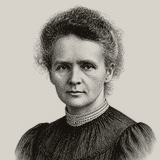
Marie Curie's working method included one move that is rarely credited to her, because it looks like biography rather than technique.
When an institution had decided against her, she did not spend her energy trying to change its mind. She obtained the room, the material and the instrument by some other route, and published the result. The isolation of radium was done in a shed with no proper ventilation, because the proper facilities were not available to her. When the Academy of Sciences voted her down for membership in January 1911, she did not campaign; she carried on and got what she needed elsewhere.
The discipline underneath that is her actual contribution here: sort the obstacles into two kinds. Some are facts about the work — the ore is scarce, the separation is hard, the trial takes seven years. Those have to be solved. Others are facts about who is asking and how the institution is arranged, and those frequently do not have to be solved at all. They have to be routed around.
Applied to this pipeline, the sorting is unusually clean.
The facts about the work are real and heavy: the chemistry is genuinely difficult, the promising compounds have been picked over for decades, and trials against rare resistant infections are hard to recruit.
The fact about the institution is that the payment mechanism rewards volume. That is not a law of nature. It is an arrangement, and it can be routed around — which is what the pull mechanisms now being piloted do: a health system pays a fixed annual sum for guaranteed access to a drug, whether it uses one course or none. The manufacturer is paid for availability. Stewardship stops being a punishment for having succeeded.
That is the same move as getting the room some other way. Not persuading the market to value the thing correctly. Building a different door.
Watch out for
Her own failure is the objection, and it is serious. Walking around an exclusion leaves the exclusion standing. She never stood for the Academy again, which spared that body any pressure to change and left her without institutional protection when the press came for her in November of the same year.
The version here is exact. Every workaround — a subsidy for the discovery phase, a subscription for the finished product, a prize — makes the underlying arrangement survivable, and therefore makes it likelier to persist. A pull mechanism funded at a level that keeps two or three programmes alive is not a fix. It is life support that also relieves the pressure that might have produced one, and it puts the state in the position of permanently topping up a market that has been allowed to keep its incentives intact.
There is a second caution about her more generally. Refusing to patent the radium process was a real decision with real consequences: the medical use spread, and she had no income from it and spent years asking for resources she could have simply owned. That is admirable and it is not a model. It solved nothing structural, and it is the same shape as the workaround — an individual absorbing a cost that a system should have carried.
Her method also made a virtue of endurance. She worked in that shed for four years, and other laboratories found things faster by thinking harder rather than boiling longer.
Answer this next
Take the thing you cannot get funded and sort its obstacles into two lists: facts about the work, and facts about who is asking.
Then check whether anyone has ever tried to solve the second list by building a different door rather than by knocking harder on this one.