Every organisation has a version of this scene. A process arrives from the centre — a new intake workflow, a reorganised support rota, a planning template — and within a week the people using it have found the three places it does not fit reality. They knew those three places before the rollout. Nobody asked, and, stranger, asking might not have worked.
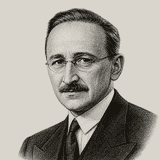
Friedrich Hayek's 1945 essay on the use of knowledge in society is about economies, but its core claim is about information, and it lands on any organisation above a certain size. The knowledge that matters for coordination, he argued, does not exist anywhere as a whole. It exists as millions of fragments — particular circumstances of time and place — held by particular people: the support agent who knows which customers churn quietly, the engineer who knows which service falls over under load, the salesperson who knows why the last three deals really closed. No central mind holds it, and — this is the sharp part — no central mind can be given it, because much of it is tacit. The agent cannot fully write down what she knows; she recognises situations rather than rules. The knowledge shows up in judgment, not in reports.
That is why the survey before the reorg and the listening tour before the strategy so often change nothing. They collect what can be stated, which is the smallest part of what is known. The fragments that matter either stay where they are, or arrive stripped of the context that made them knowledge.
Move the decision to the knowledge
Hayek's conclusion was structural, and it transfers directly: if the knowledge cannot be moved to the decision, move the decision to the knowledge. The design question for any process is not how do we get better information to the centre but which decisions can be made where the facts already live. What the centre owes the edges is not instructions; it is the equivalent of prices — a few honest signals of what things cost and what matters most, so that local judgment can align without every case travelling up for a verdict.
In practice: give the team that owns the queue the authority to change the queue, and hold them to outcomes rather than compliance. Publish the constraint, not the procedure — this margin, this quality bar, this promise to customers — and let the people holding the fragments decide how to meet it in the situations only they can see. Every escalation rule is a claim that someone far from the facts will decide better than someone near them; some of those claims are true, and most deserve to be examined rather than inherited.
The test of a proposed centralisation is symmetrical: name the specific knowledge the centre has that the edge lacks. Sometimes there is a real answer — the whole-portfolio view, the legal exposure. When the answer is only consistency, what is being purchased is uniformity, and the price is everything the edge knew.
Watch out for
Decentralisation is not automatically wise. Local knowledge comes bundled with local incentives, and the team that knows the queue best may also run it for its own comfort. Hayek's price signals matter precisely because unaccountable local judgment drifts; the honest design pairs edge authority with visible outcomes, not with trust alone. And some knowledge genuinely is central — the pattern across all the queues that no single team can see. The essay is an argument about where each kind of knowledge lives, not a slogan that the centre is always wrong.
It is also fair to note that Hayek pushed the argument furthest as politics, where its record is contested far beyond anything this page needs. The organisational core — stated knowledge is the small part, tacit knowledge does not travel, structure should follow the facts — stands on its own.
Answer this next
Take the process your team most recently inherited from the centre. What did the people closest to the work know that the design shows no sign of — and where, structurally, would that knowledge have had to live for the design to catch it?