The announcement is always the same shape. A development, a scheme, a stadium, a plant. And a number: this many jobs.
The number is usually true, and you can go and look at it. There are the workers, there is the site, there is the photograph of people in high-visibility jackets who genuinely were not employed there last year. Everything about it is checkable, which is exactly what makes it so persuasive and so incomplete.
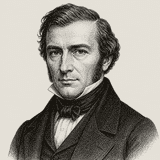
Frédéric Bastiat spent the last years of a short life on this one problem. His illustration is a shopkeeper whose window gets broken. The glazier is paid, and everyone consoles the shopkeeper by observing that the glazier now has work — money circulating, trade encouraged. Bastiat's objection is not that the glazier's gain is fake. It is that the whole account stops at the person you can see.
"It is not seen," he wrote, "that as our shopkeeper has spent six francs upon one thing, he cannot spend them upon another." The shoes he would have bought are not in the story. The shoemaker who would have made them is not standing in any photograph, and never knows he lost anything.
Where the money would otherwise have been
The move is to ask, every time, what the same money and the same hours would have been doing instead — and to notice that the answer is always harder to see than the announcement, because it consists of things that did not happen to people who never learned they were affected.
This is not an argument that public projects are bad, and Bastiat is regularly conscripted for that claim by people who have read the first half of him. It is an argument about accounting. A figure that counts only arrivals and never departures is not a measurement of anything; it is one column of a ledger, published on its own.
You can run it on your own life just as easily, and it is more uncomfortable there. The evening that went into the thing you agreed to do out of obligation. The savings that went into the car. In each case something was visibly bought, and something else silently was not — and the second list is where most of the regret in a life actually accumulates, precisely because nobody sends you a photograph of it.
Watch out for
Now the failure, which is his own and which he warned about better than his followers do.
The unseen has to be traced, not asserted. Because the alternative is invisible by definition, a motivated person can claim it was whatever suits their argument — the imagined shoemaker is always more deserving than the actual glazier, and inventing him costs nothing. Once you have this tool it is very easy to conjure a superior use for any pound anybody else spends and call the conjuring rigour.
The harder limit is that the method finds a cost without measuring it. It tells you which direction the error runs, never how large it is, and a direction is not enough to decide anything.
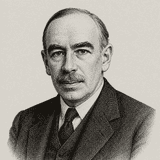
And there is a case where the whole argument may simply not apply. Bastiat assumes the six francs were going to be busy. If the money would have sat still and the workers would have sat idle — a slump, in other words — then the unseen alternative is not a pair of shoes. It is nothing, and the visible jobs are the whole of the story. That is the argument Keynes built, and it is not a small footnote to this one.
Answer this next
Think of the last significant thing you paid for. What is the specific other thing that money was going to do?