The numbers have a shape that ought to be more widely understood, because it is not confined to aviation.
Certified controllers are some thousands short of the target. The gap produces delays, because a thinly staffed facility has no capacity to absorb a sick call or a weather event and the response is to slow the flow of traffic. And the gap will not close quickly, because a controller takes years to certify.
The part that makes it a trap rather than merely a shortage is who does the certifying.
The urgent consumes exactly what the important needs
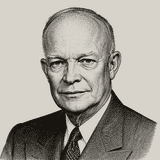
Dwight Eisenhower spent his career on staffs, and the distinction he is remembered for was a working method rather than an aphorism: the demands that shout loudest are rarely the ones that determine the outcome, and unless someone deliberately protects it, the merely urgent will consume all the time and judgment the important actually requires.
Most people meet that idea as a personal scheduling suggestion. It is considerably more interesting as a description of an organisation, and this is close to a pure case.
The urgent here is today's traffic. It cannot be deferred, and covering it means overtime, extended shifts and holding experienced people on position.
The important is certifying the next cohort. That is what closes the gap, and it is entirely dependent on experienced controllers being available to instruct — the same individuals, the same hours.
So the two do not merely compete for attention. The urgent consumes the specific input the important runs on. A shortage produces overtime; overtime consumes instructor hours; fewer instructor hours slows certification; slow certification extends the shortage. Each step is a reasonable local decision made by someone with no alternative, and together they form a loop that tightens.
The general form is worth naming, because most organisations contain one. Wherever the same scarce person both delivers today and trains tomorrow — a senior engineer, a specialist clinician, a chief examiner — an urgent-only regime is not merely unbalanced. It is self-perpetuating, and from inside it looks exactly like coping.
What can actually be done about it
The distinction is only useful if it changes what is measured, and there is one measurement that does most of the work: instructor hours delivered, reported separately, every month, alongside the operational numbers.
That sounds procedural and it is the whole intervention. An input that is not counted is spent by default on whatever is shouting, because nobody has to account for its absence. Once it is counted, a decision to spend it elsewhere becomes a decision somebody makes and signs, rather than an outcome that simply happens.
The second move is the honest one: if the protected hours cannot be found, the load has to come down. Fewer movements scheduled, less capacity sold, a slower ramp — deliberately, in advance, and named as the cost of getting out of the loop. That is unpleasant and it is the only version of this that is not wishful.
Watch out for
Sorting work into important and urgent is a judgment rather than a formula, and it can be got wrong in both directions. A leader can dismiss a genuine emergency as a distraction, and can equally dignify a comfortable long-range project as important precisely in order to avoid the unpleasant immediate thing in front of them.
In a safety-critical operation there is a harder limit, and it should not be softened. The urgent here is aircraft in the air. It cannot be declined, deferred or traded against a training target, and any reading of this piece that ends with protecting instructor hours at the expense of today's safety margin has inverted it. The only legitimate route to the protected hours is a smaller load, which costs money and disappoints people, which is why it is rarely chosen.
And his own method has a documented weakness. It is built to forge unity and hold a coalition together, and where the right course required getting out in front of what everyone could agree to, the record shows hesitation — his caution on civil rights above all. This is not the lens to take when the necessary decision is the unpopular one.
Answer this next
Name the people in your organisation who both deliver today and train tomorrow.
Then find out how many of their hours went to each last month. If nobody counts the second number, you already know which one has been losing.