The same requirement is in force in one jurisdiction and suspended in another, and both outcomes were reached by serious people reasoning carefully. Meanwhile the public argument runs on rails. One side says a free society does not make people identify themselves before they read. The other says no other industry is allowed to sell to children and call it expression.
Both statements are true as stated. Neither is an argument about anything that exists.
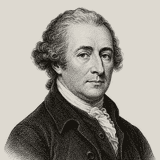
Edmund Burke built a career on that objection, and it is the most portable thing he left. His position was that no political principle is good or bad in the abstract — liberty, authority, equality are all judged by what they do to actual people under actual conditions — and that a debate conducted at the level of the principle can be won by either side indefinitely without anybody learning anything.
The particulars that decide it
The test he applied to a proposal was almost boringly concrete: who exactly, in what country, with what habits, under what pressures, and what happened last time something of this shape was tried.
Applied here, that produces a short list of questions, none of which appears in the principled version of the argument, and every one of which changes the answer.
What is the check, mechanically? A document uploaded to each service is not the same policy as a signal passed by the device or the app store, and the difference is not administrative. It determines whether an identity document ends up in the hands of thousands of operators or of one, which is the whole of the privacy question.
Who retains what, and for how long? A system that verifies and discards is a different object from one that verifies and keeps, even where the statute reads identically.
What happens to the adult without the document? Every scheme has a failure population, and its size is a fact rather than a matter of opinion.
What happens to the young person whose household is the danger? Some of the people a requirement is written to protect are the same people for whom an unmonitored route out is the protective thing.
And what did the places that already have it actually observe? Several jurisdictions have been running versions of this for more than a year. That is evidence, and it is oddly absent from a debate in which both sides prefer to reason forward from a principle.
None of these is a clever point. They are the ordinary particulars, and the reason they stay out of the argument is that they do not divide the way the abstractions do.
Watch out for
This method has a real defect, and Burke's opponents named it in his lifetime. If circumstances can qualify any principle, then circumstances can be tuned to reach whatever conclusion the arguer already wanted. Paine and Mackintosh both put that to him, with some justice: he applied the standard ferociously to the East India Company and the Crown's influence, and much more gently to the establishments he happened to be fond of.
So the honest form of this requires something the comfortable form does not: say in advance which particular would change your mind. If no observation about retention, failure rates or outcomes in the jurisdictions already running it could move you, you are not weighing circumstances. You are decorating a conclusion with them.
The second caution is one his critics have always pressed and it holds. An appeal to prudence and particulars is an infinitely renewable argument for not yet, and the people who hear not yet are the ones already bearing whatever the harm is. Burke's own answer — that a state without means of change has no means of survival — is the corrective, but it is a corrective he applied selectively, and anyone borrowing this method should assume they will too.
Answer this next
Whichever side of this you are on, write down the one factual finding that would move you: a retention practice, a measured effect on the population it was written for, a failure rate among adults.
If nothing you can name would do it, the disagreement is not about children or speech. It is about which abstraction you would rather be governed by, and that argument has no end.