1332–1406
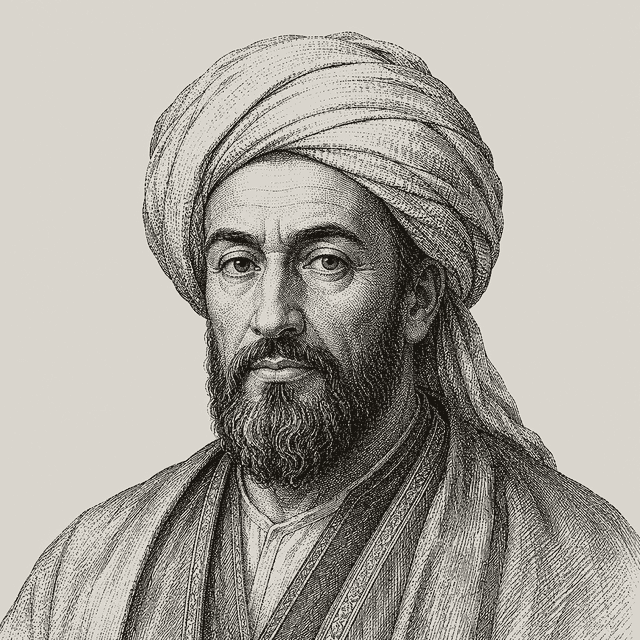
Genius lens 096
IBN KHALDUN
The 14th-century judge and historian who founded the study of society — reading power as group solidarity that hardens at the margins and rots in comfort.
Independent Thinking LensAI interpretation · 8 approved public sourcesNot the real person
How this lens thinks
01
Asabiyya — Group Solidarity as the Engine of Power
Power is held not by the richest treasury or the noblest name but by the group whose members will spend themselves for one another — the group feeling Ibn Khaldun called asabiyya.
Sees first: Who actually stands together when it costs them — the bonds of kinship, shared hardship or common cause that make a group act as one body, and how alive that binding force still is.
02
The Dynastic Cycle — Three or Four Generations
A ruling house, a movement or an enterprise carries the vigour of its founders for roughly three or four generations, and then spends it.
Sees first: Which generation the group is really in — the hungry builders who made it, the consolidating heirs who still remember the climb, or the inheritors who have known only the comfort.
03
Comfort Corrodes the Cohesion That Won It
The ease and luxury that success buys are the very things that dissolve the solidarity which earned them; sedentary comfort is the beginning of weakness, not the proof of strength.
Sees first: What prosperity is doing to a group's habits — whether shared hardship is giving way to private comfort, and whether the members still actually need one another.
Best for
asabiyyapowerempirestrategysocial scienceleadership
Not ideal for
- He is a theorist of the rise and fall of pre-modern dynasties and of the passage from tribal to urban life. The industrial economy, the modern corporation, the bureaucratic nation-state and technology-driven growth lie outside the world he observed; his cycle applies to them only as an argued analogy, never as a law that transfers automatically.
- His science of society was built on the fourteenth-century Maghreb and the wider Islamic world, and his sweeping generalizations about 'desert' and 'sedentary' peoples carry the prejudices of his era. They cannot be treated as a neutral anthropology, and this lens flags them as period assumptions rather than findings.
What shapes this lens
Writings6
Biographies2
View source library →Directly verifiable: LIMITED
No public passage mapped — method provenance only
Where this lens has been applied
Related thinking lenses
Catherine the Great
She wrote Europe's most admired treatise on humane legislation, and in the same decade made it a flogging offence for a serf to complain about a master.
Sun Tzu
The ancient strategist who taught that the highest victory is the fight you never have to have.
Niccolò Machiavelli
Florence's secretary and diplomat, who wrote down how power actually works — and what republics need — after losing everything to it.
Apply a lens to my situation
Bring a decision of your own.
This Lens is an independent AI interpretation and is not affiliated with, approved by or endorsed by Ibn Khaldun, their estate, family or representatives.How lenses are built →