There is a stage every successful team remembers and cannot recreate. Eight people, underdogs, one enemy, no politics — decisions made in a hallway, everyone covering everyone. Then it worked. Now there are two hundred people, a budget, and a strategy document, and something that used to be free — alignment, trust, speed — has to be purchased through process, and the purchase never quite covers it.
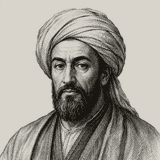
Ibn Khaldun would have recognised the whole arc. Writing the Muqaddimah in 1377, after a career inside the rising and collapsing dynasties of North Africa, he asked why power moves the way it does — why hungry groups from the margins keep overthrowing richer, larger, better-armed incumbents, and why the winners then decay on a schedule. His answer was a variable most historians of his time did not track: asabiyya, the solidarity that makes a group act as one body. Not headcount, not treasury — the willingness of members to spend themselves for one another. Groups forged in shared hardship have it in abundance. It is the true currency of power, he argued, and everything else is downstream.
His darker observation is the one that transfers: victory begins spending the asset immediately. The group wins, the winnings arrive, and the conditions that manufactured cohesion — shared risk, visible interdependence, a fate held in common — are exactly what success removes. Comfort individualises. Rank stratifies. The generation that inherits the position without the hardship maintains the forms and loses the force, until the institution is large, rich, and hollow — at which point some small cohesive group from the margins arrives, and the cycle turns. He gave dynasties three or four generations. Companies seem to run the same arc faster.
Track the binding force as an asset
The management translation is to treat cohesion the way Khaldun treated it: as the primary asset, with its own balance sheet. Two practices follow.
First, audit it honestly. His test was behavioural, and yours should be: who actually stands together when it costs them? Does the senior team defend one another's projects in the room where it counts, or trade them away quietly? When something breaks at the seam between two groups, do they close the gap or document whose fault it was? Answers to those questions are the real org chart.
Second, notice which company habits are asabiyya expenditure. Differential privileges that make shared fate visibly untrue. Growth that adds people faster than they can be bound to anyone. Success narratives that credit the few — because the many were listening. None of these shows up as a cost anywhere, which is precisely the trouble; the Muqaddimah is one long argument that the invisible ledger is the one that decides.
What hardship built, only something deliberate can maintain: shared real stakes, leaders inside the work rather than above it, new members joined to the group's fate rather than merely hired. Khaldun doubted it could be done for long. That doubt is worth keeping even while you try.
Watch out for
His cycle is the strongest and weakest part of the theory. Stated as destiny — three generations and out — it is plainly false at the level of particular institutions; some renew, and his framework underexplains how. Use the mechanism, not the timetable: comfort corrodes cohesion is a tendency to be managed, not a prophecy to obey. And the concept has an ugly edge the audit must respect — tight solidarity can bind a group against outsiders, dissenters and newcomers, which in a company means cliques wearing the costume of culture. The asset is cohesion around the mission. Cohesion around the founding clique is the disease presenting as the cure.
Answer this next
Name the last moment someone on your team took a real cost to cover for another group. How long ago was it — and what has replaced whatever used to make that ordinary?