You have read the memo. It runs three paragraphs, it is perfectly calm, and by the end of it you are not certain whether anyone has lost a job. The organisation is being aligned to a new operating model. A number of roles are impacted. Some functions will be consolidated as part of a broader restructuring.
Somewhere behind that paragraph a named person is being told, on a Tuesday morning, that they no longer have work.
This year the trackers have been recording a specific swap: announcements that named the new tools as the cause giving way to announcements that name reorganisation instead, with the decision underneath looking much the same. That deserves a moment of attention, and the attention it deserves is not outrage.
The instrument test
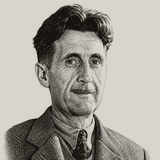
George Orwell's most durable working idea was not about politics. It was about prose as equipment. A sentence either lets a reader see a thing or stops them seeing it, and the second kind is built rather than stumbled into. The machinery is unremarkable piece by piece — the abstract noun, the passive with no actor, the metaphor worn smooth enough that it no longer produces a picture. Assembled, it does a job. It puts a word where a person should be.
The method that falls out of that runs on the memo in front of you in about ninety seconds.
Rewrite the sentence with a person, a date and an action in it. Impacted roles becomes: on Tuesday, forty people will be told. A consolidation of functions becomes: the team in one city will be told their work moves to another. Then read your version and ask whether whoever signed the original would sign this one.
Often they would. Plenty of decisions survive translation into concrete terms — they are hard, they are defensible, and the abstraction was only house habit. That is a useful result, because it locates your discomfort in the decision rather than in the writing.
Sometimes they would not sign it. That is the finding.
What the noun is protecting
The next move is to ask who is served by the reader not picturing it, and inside a company the answer is rarely a conspiracy. The first person protected by an abstract noun is usually the one writing it.
Restructuring is a word with nobody in it. It has no agent, since restructuring is something an organisation undergoes, rather like weather. It has no object, because roles are not people. And it carries no reason, which is the part that matters most. A cut attributed to a tool invites an immediate question about whether the tool really does the work and who checked. A cut attributed to structure invites no question at all, because structure is the sort of thing that simply changes.
That is the practical value here. Not indignation about language, but a rough gauge of which questions the writer was prepared to take.
Watch out for
The serious objection is that plainness is itself a technique, and any technique can be learned.
A manager who states bluntly that forty jobs are going because a system does the work for less has written a clear sentence. Clarity is not evidence that the decision is sound, that the system does the work, or that anybody checked the arithmetic. It is evidence of confidence. Treating clear prose as a proxy for honest dealing is the standing weakness of this whole approach, and Orwell knew the ground better than most: he spent two years writing propaganda talks for the BBC Eastern Service, and the 1946 essay in which he set out his rules breaks several of them, while its historical claims about the decay of English are not the sort a linguist would accept.
There is a second caution, which his own writing does not supply. Euphemism is sometimes ordinary decency. A circulated announcement is read by the people it is about, by their families and by their next employer, and there are humane reasons not to publish the concrete sentence to an audience of thousands. So the test is not whether the abstraction was used. It is whether the concrete version exists anywhere — in the paper that went to the board, in what the manager says in the room, in the note the finance team worked from. If the abstract version is the only one anyone ever wrote, nobody has yet made this decision in terms they could be held to.
Answer this next
Take the last announcement your organisation made about people and write one sentence naming who, how many, and why, in words a fourteen-year-old would picture.
If that sentence already exists somewhere, the abstraction was manners. If you have just written it for the first time, you have found the thing worth raising.